


The Sound
I have always known the sound.
It’s nighttime, around eight o’clock. I remember because the daily news is on, my mother lying on the couch, watching. I’m on the floor, old enough to read, still young enough to play with my Lego. In the background, I hear my father banging utensils in the kitchen, and somewhere in the distance, several kilometers away, engines roar from the raceway. The sound doesn’t shake the house, it doesn’t interrupt the broadcast. It simply enters the room, carried by the north-east passage, and stays… folding itself into the evening like wind or insects. It became part of the soundscape. Normal. Familiar. Carried like weather, almost like breath.
My cousins, the creators of the rotary engine monster that is Deo-beast, wanted to put me in a junior dragster—which can start as early as eight years old. But after my older cousin, Paul Wederfoort, crashed in Aruba and later died from his injuries on Curaçao, everything paused. For years my mother forbade racing, or even being near a track. Any track.
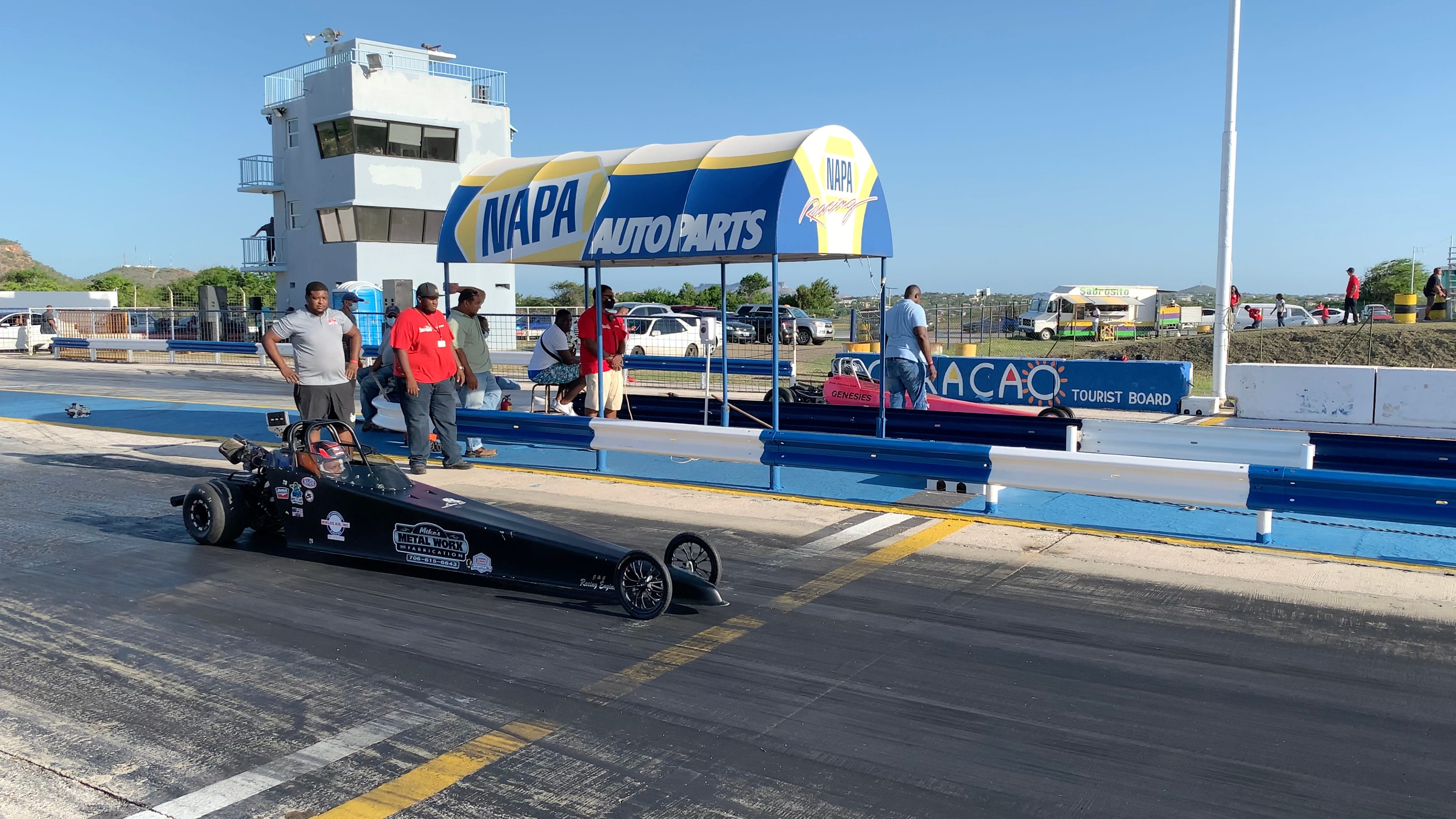
Later, my father would teach me to drive anyway. I could close figure eights before anything else. Under the pretext that I should know what to do in case of an emergency, of course.
So the sound lived in me long before I ever stepped onto the raceway itself. Sometimes I would line up my Barbies and run imaginary Lego races across a DIY cardboard track, pretending I’m there. Looking forward to the day I would finally see what was behind those engine roars.
Many years later, living in Otrobanda just steps away from the main road, I learned how sound can behave very differently. Motorcycles and heavy engines sent vibrations through Breedestraat so strong the windows of the century-old monument trembled in their frames. You feel the revs before you hear them. Still, it doesn’t feel threatening. It feels alive. Like the city breathing. Constant, like us throughout the day.
Ritual, not chaos
But, at the raceway, sound doesn’t just surround you.
It enters you.
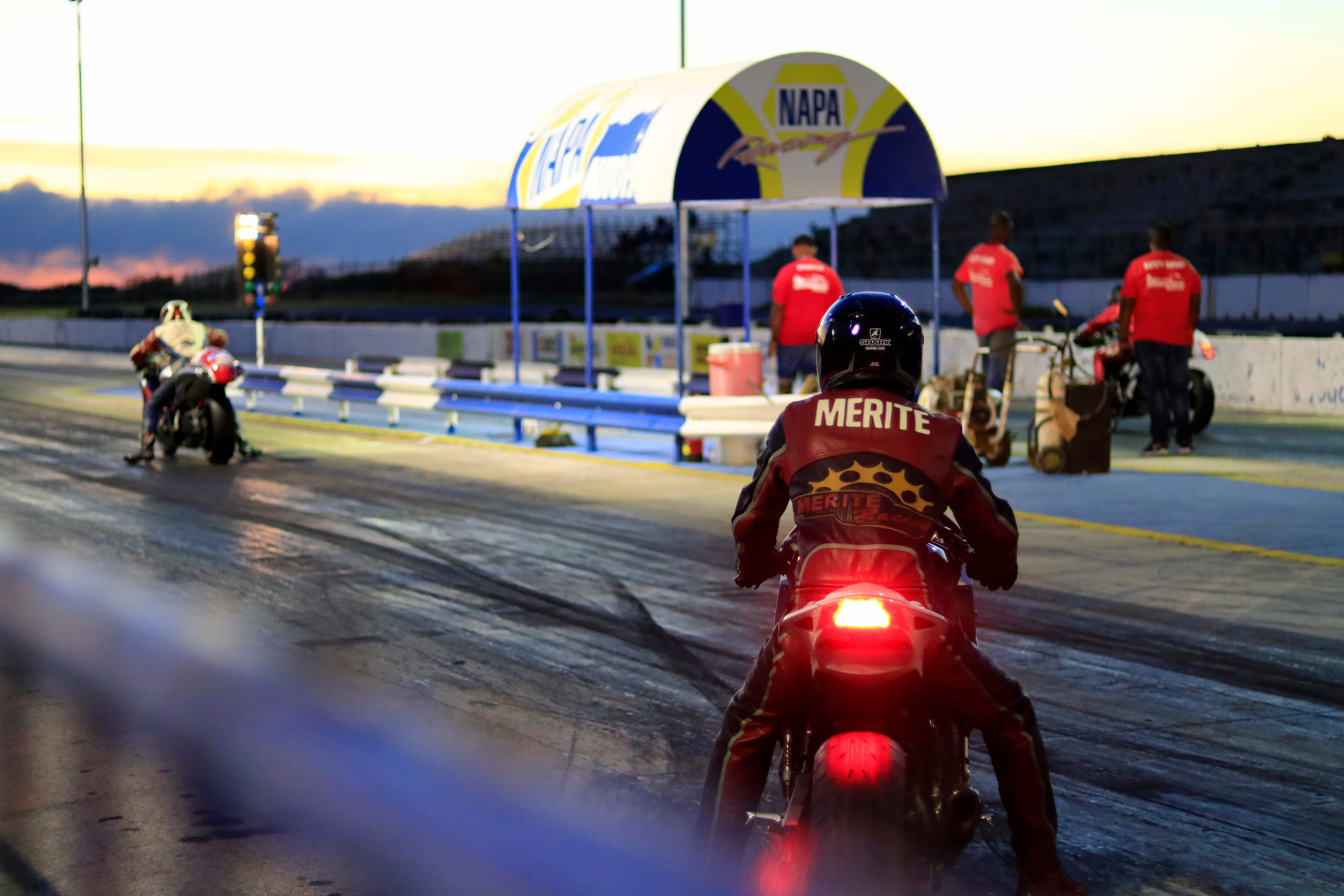
When cars and motorcycles burn out, there is no talking. Sometimes it’s so loud I instinctively hold my breath. If you’re close enough—like I often am while documenting these events—you feel a kind of wind push against your body, rubber dust sticking to your skin, stringing your eyes. I used to bring eye drops to every event until someone laughed and told me to just keep my eyes open and let it burn. I thought they were kidding, but they were right.
Your body adjusts.
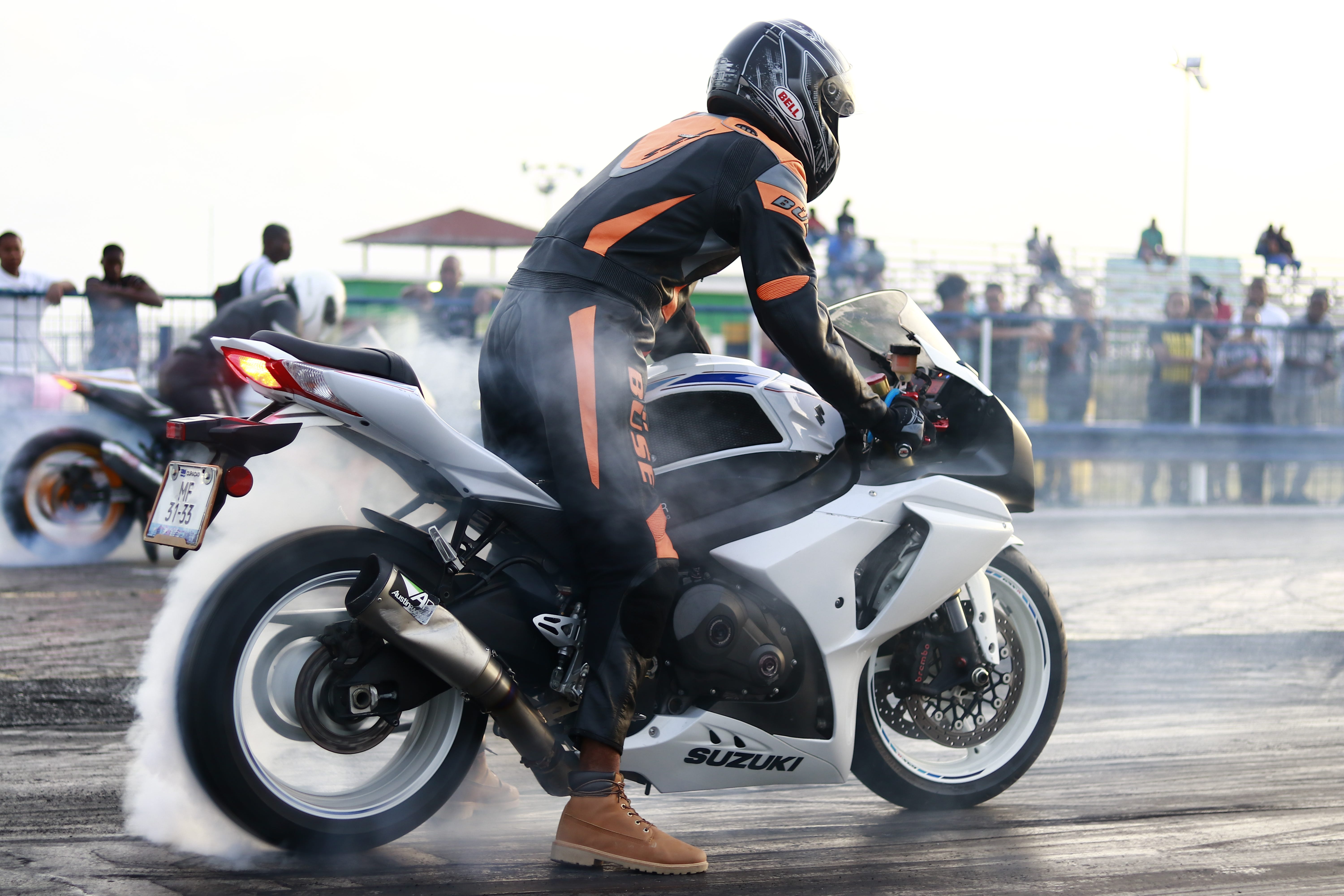
Before a dragster launches—lined up against its opponent in a straight-line sprint where everything depends on acceleration—everything tightens. People freeze. Engines idle hard. Tires stiffen. The MC’s voice cuts through the air, hyping the moment. I’m usually just a few meters away, camera in hand, earplugs in, feeling it all through the soles of my feet. Then the lights line up. The launch happens faster than you can count. Cars move so fast they need parachutes to slow down; something that still feels surreal to witness living on a relatively small island.
Sometimes things go wrong: crashes. Occasionally, oil downs so severe the track shuts down for hours, sometimes while drivers are taken to the hospital, and the surface is repaired. You sit on the side, “patiently” waiting as the tractor driver drifts the vehicle himself while clearing the track.
You sign up for all of it.
The beauty and the risk.
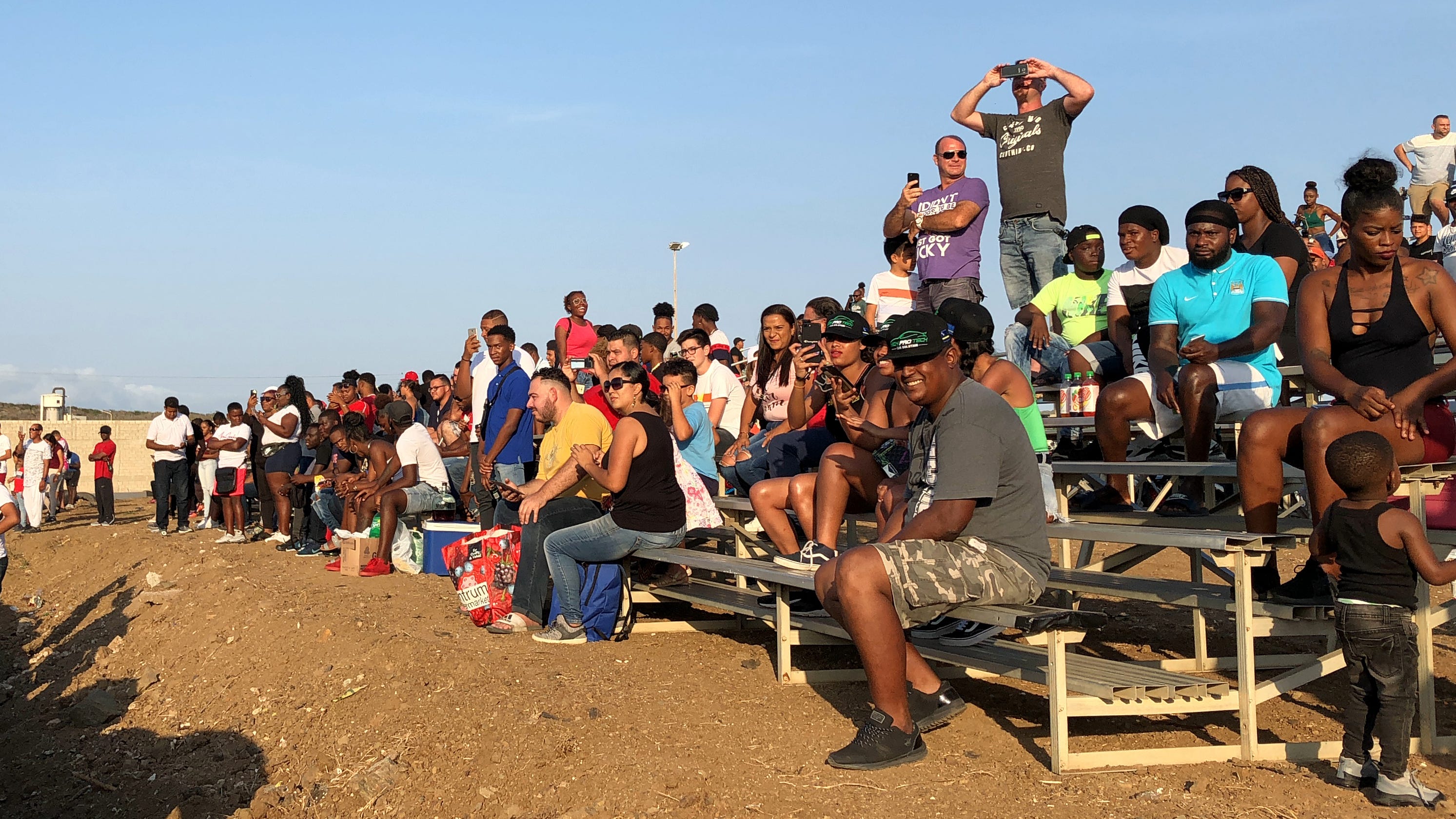
The silence never really comes, because as soon as one run ends, another engine fires up. Before one category finishes, the next is already lining up; passing through water and warming tires. It’s constant. For hours. Late into the night. On a hill near the north coast where locals know to bring hoodies and jackets because it can get cold. Curaçao cold. In a way the rest of the island rarely does.
This is not chaos. This is ritual.
Fever
Fever, however, lives mostly outside the raceway. It moves through the island differently. Because motorsport on Curaçao doesn’t only exist on the raceway.
Sometimes it’s a family friendly drift event on a Sunday afternoon. Food trucks, kids running around, smoke rising in the background as tires spin so fast they seem to reverse direction. Motorsport on Curaçao has taken many forms over the decades—from improvised circuits to the near-mythical Grand Prix of 1985—and fever is part of that same lineage.
Other times it’s late at night, driving home, when a group of motorcycles (sometimes quads, sometimes cars) pulls ahead of you and you already know what’s about to happen. Traffic slows. Someone steps into the road and blocks a lane. Engines rev. Smoke fills the street. Three days later, the black lines are still etched into the asphalt.
Witnesses.
There are other moments too, the ones outsiders rarely understand.
When someone from the community dies, we gather. After the viewing, after the prayers, the casket is loaded into the hearse and the caravan moves together, hazard lights blinking. We pass the home, sometimes the workplace, and sometimes their garage or even the track. so their spirit can say goodbye. Water is thrown behind the hearse so it doesn’t linger. And sometimes, people fever. Cars and motorcycles spinning. Rubber burns. Noise so loud it feels ceremonial.
Illegal, yes, but tolerated. Because this is mourning. This is love.
This is why I never understood the question: Why fever? Why not just go to the beach and have a picnic?
Because this isn’t (just) about leisure.
For those of us who grew up with it, this isn’t a hobby we picked up. It’s inherited. It runs through families. Through grief. Through joy. Through stress. Through community. It’s why you see the same faces everywhere; at the track, at cafés, hardware stores, schools, work.
It’s why on Monday mornings, seeing fresh tire marks on the road used to feel like proof that everyone had a good weekend.
And non of this is properly documented.
Culture without Archive
After the fever, I went looking for traces. Not on the track, but in places that are meant to hold memory: the library, the island’s national archives, and a motorsport museum that is rarely open.
There was almost nothing. No official record in any meaningful sense.
For a culture that has pulsed through our nights for well over half a century, the paper trail is shockingly thin. No accessible newspaper records—with the exception of a Dutch platform hosting one of the local papers. No consistent documentation. Nothing readily available in our native tongue.
What exists is fragmented: a few newspaper articles from the 1980s and 1990s referencing the Grand Prix of 1985, when Willemstad’s streets briefly became a circuit, scattered mentions of races, announcements, and retellings.
Nothing sustained.
Nothing that feels like continuity.
Much of it does not exist in our own language in any accessible form. And even where there is awareness within institutions, conversations with staff often ended in uncertainty: “maybe one day, we don’t know when.” At the national archive, there is an awareness of the absence. A willingness, even. But willingness does not fill shelves.
The only place where I found something resembling continuity was The Chronicles of Boost (TCOB): an online archive built from within the community itself. Documentation, explanation, and memory circulating among those who already know where to look.
And then something shifted in how I understood what I was seeing. Because while institutions had not kept this history, people had. And without planning to, so had I.
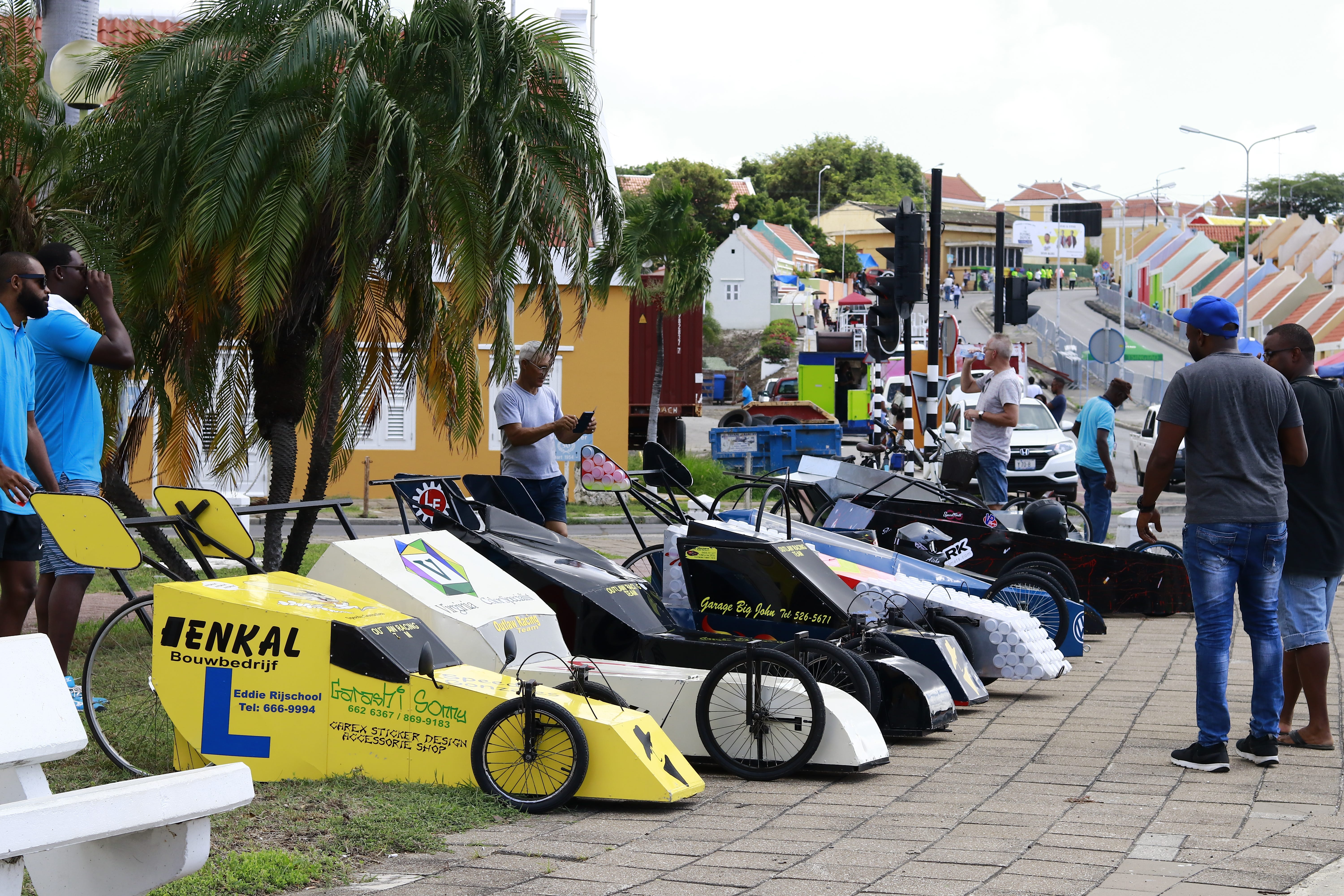
For more than a decade I had been photographing and filming the same spaces I was now searching for in archives: night races at Curaçao International Raceway, community gatherings, soapbox runs through Pietermaai, demolition derbies where crowds leaned into chaos as much as spectatorship.
What once felt like personal documentation began to feel different. My hard drives—full of movement, sound, speed, repetition—stopped resembling private memory and started resembling something closer to an unacknowledged archive.
Motorsport lives loudly here. But outside of the moment, it barely settles anywhere.
So what remains if no one is designated to hold it?
Community is inconvenience
Community is inconvenience. It always has been.
It’s helping someone move when all you want to do is sleep. Watching someone else’s child because their shift ran late. Sitting in traffic while a funeral caravan passes—dozens of vehicles following the hearse. Or letting a street be loud for twenty minutes because something is being celebrated, mourned or released by burning rubber.
Community means nobody gets what they want all the time, but everybody gets what they need sometimes. Freedom isn’t frictionless, and belonging always costs something, but that cost is not shared equally.
On Curaçao, sound has always been part of that exchange. Noise isn’t just disruption; it’s presence. It’s how people show up for each other, even when it’s uncomfortable.
Yoradó di morto. Karnaval. The track.
Some forms are accepted.
Others are not.
When the noise became a problem
For a long time, I didn’t question any of this. Until I started hearing how it was described by others—mostly immigrant voices, online and in person. Talk of “geluidsoverlast”. Noise pollution.
Slowly it became clear: this was no longer about sound. It was about language. About how culture is described, evaluated, and made legible.
That was the moment the noise stopped being background.
This was no longer a complaint.
This was a battle.
Method: Facebook as field site
In early November 2025, I posted open calls in several local Facebook groups asking for people who experience disturbances from motorsport-related noise. Facebook is Curaçao’s most used platform, with over half the island’s population holding an account. Some groups reach forty to eighty thousand members. The posts remain publicly accessible.
What followed was not a single narrative, but a split. Revealing far more than frustration.
Findings: proximity and infrastructure
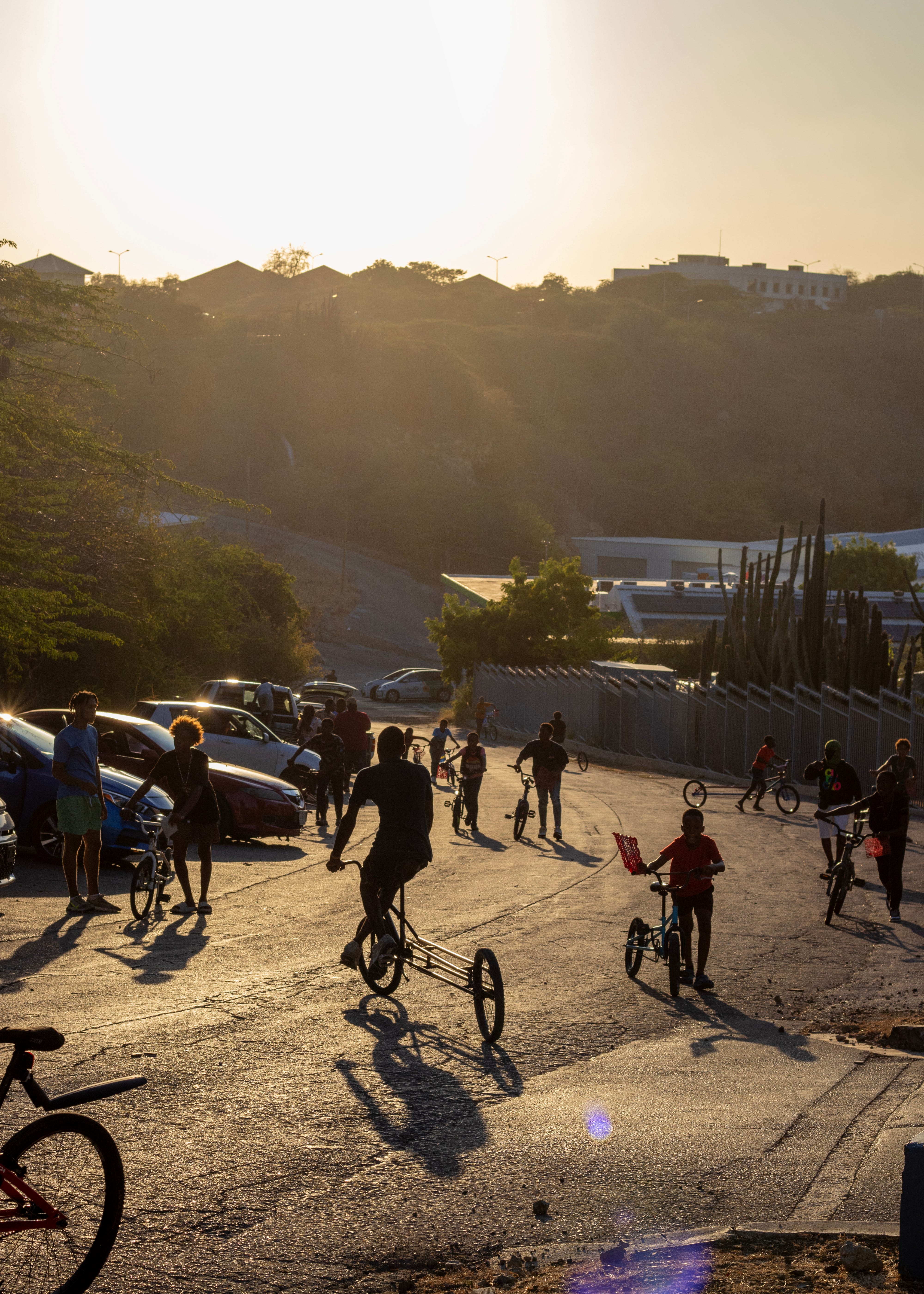
Some responses focused on proximity rather than rejection. Mothers spoke about children unable to ride bikes safely. Residents spoke about timing, density, exhaustion. The issue, repeatedly, was not the activity itself but its location and lack of designated space.
“I don’t hate the sport,” one woman (Zimmerman, 36) said. “I just don’t want it in my neighborhood if it means my kids can’t safely ride their bikes or cross the street.”
The recurring solution was not elimination, but structure. Designated areas, cleared infrastructure, coexistence.
Findings: hostility and disposability
Other responses, primarily from immigrant voices, framed the issue differently.
In comments and private messages, some expressed hostility that went beyond concern. Suggestions included pouring oil or soap on roads so riders would “slip and stop once and for all.”
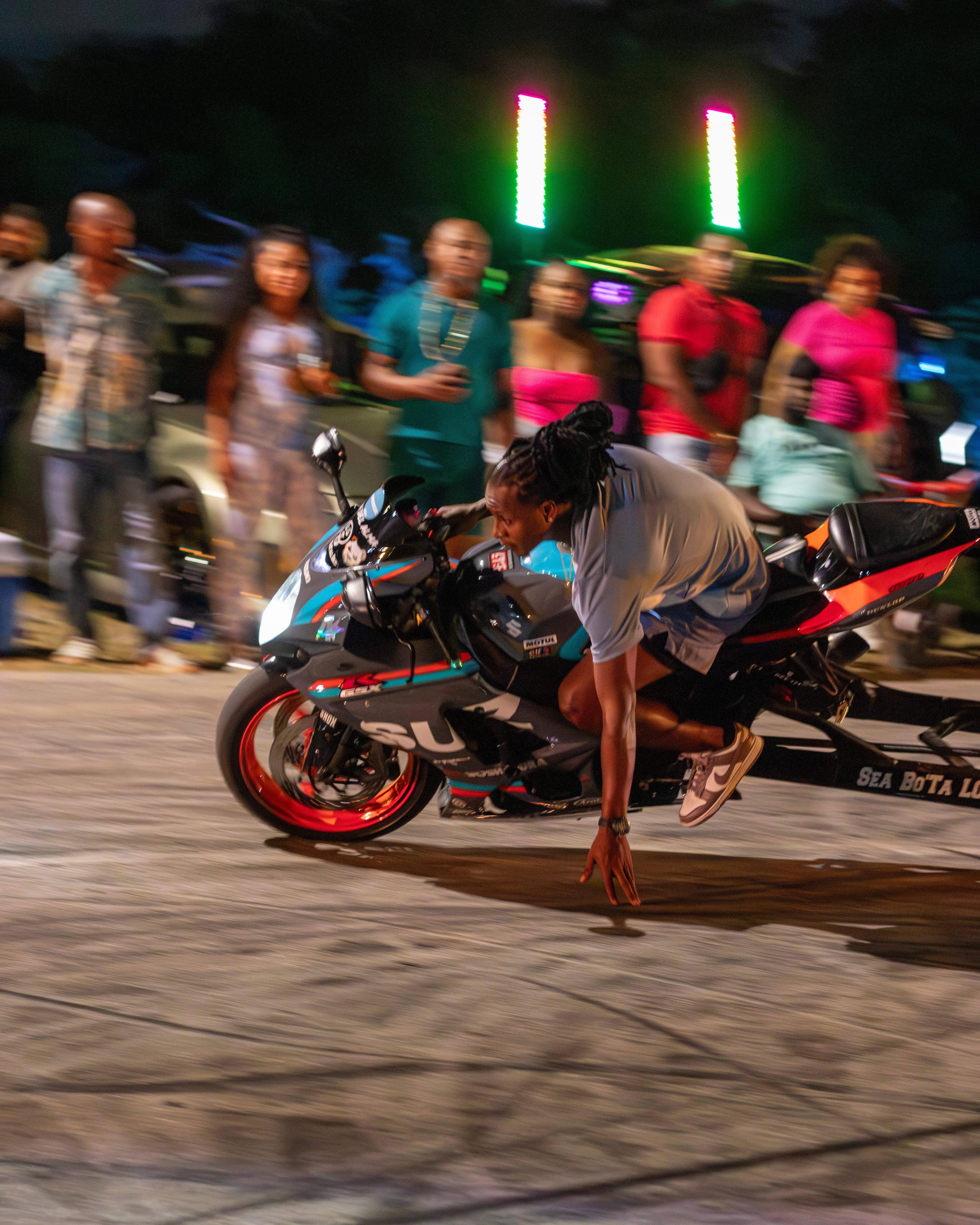
A Dutch immigrant woman in her seventies, interviewed one-on-one, said that when a rider performs a wheelie in front of her car, she thinks: van mij mag je ter plette vallen (you can fall to your death for all I care). One commenter wrote that riders “deserve whatever happens to them.” Another suggested that “maybe a few serious accidents would finally teach them a lesson.”
These responses were not isolated emotional reactions. They were offered as justified outcomes.
Yet these perceptions are not fully supported by available data. Traffic reports from Forensys and the Ministry of VVRP show that the majority of accidents are linked to general driving behavior—particularly inattention—rather than motorsport activity.
Between January and August 2025, a total of 7.482 accidents were registered, with common accident types including rear-end and side-impact collisions. Motorcycles and scooters combined accounted for only a small fraction of recorded incidents; around five percent based on available data. The date points instead to broader issues: infrastructure, traffic density, and everyday driving behavior.
System lens
“Are motorsports, is fevering, really a disturbance,” Terence Ching asks, “or are you being disturbed?” Terence frames motorsport not as isolated disruption, but as part of a broader system of space, access, and informal survival structures.
With over twenty years managing Curaçao’s thirty-plus public parks, he places motorsport culture alongside mangroves: systems that persist because conditions demand adaptation rather than permission. He describes a “gorilla method” of cultural survival: non-aggression, occupy space, continue the work despite absence of formal support.
Former police spokesperson Imro Zwerwer notes that most incidents linked to motorsport are not violent, but disruptive: noise complaints and traffic obstruction. Serious accidents occur less frequently than assumed, or are more often linked to scooters and quads than racing vehicles.
He argues that enforcement alone is insufficient: “Space, leadership, and structure are essential.”
Terence Ching adds another layer: the issue is not simply disturbance, but competing claims to space. For him the conflict reveals a deeper question of value.
“Bo dushi no tin mesun balor ku mi dushi?” (does your enjoyment outweigh mine?)
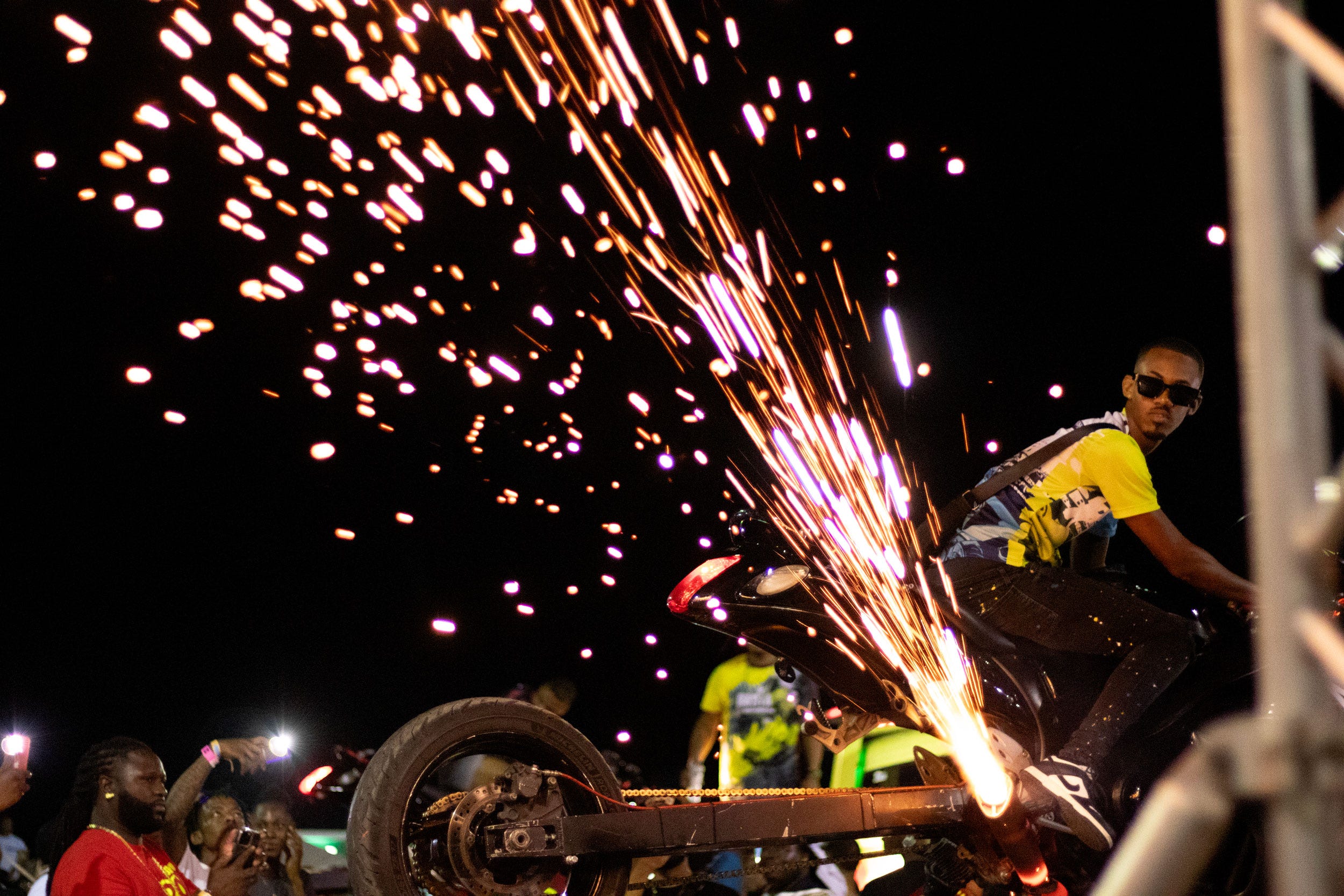
Ultimately asking whose form of expression are allowed to occupy public ground.
What remains
If institutions didn’t archive this culture, the people did.
What struck me most, in the responses and beyond them, was an imbalance in expectation. Curaçaoans who move abroad are asked to integrate—to learn the language, adapt, adjust. And we do. We learn when to be quiet.
Here, that same adjustment is rarely expected in return.
Discomfort with local customs is not approached as something to understand, but something to eliminate. As if culture were something that only counts when it is comfortable to those outside of it.
So the question shifts.
Not whether noise is a problem, but whose way of living is allowed to define the terms.
Liber (to be free)
TCOB, founded in 2008 by Francis Hermina, became Curaçao’s unofficial motorsport archive long before social media algorithms caught up. Long before pages like hoonhunters5999 or carhubs began to appear. What I had begun to understand in the archives becomes visible here. TCOB is proof of a culture documented from within.
What’s at stake
Francis is direct about the consequences: “We have a ton of money to lose.”
Motorsports bring visitors who spend locally—hotels, food trucks, mechanics, restaurants, tours. “This is not all-inclusive tourism,” says Francis. It is community-based economy, moving through relationships rather than systems.
TCOB photographer and videographer Willem van Lamoen, now based in Europe, describes a different reality. In the Netherlands, increasing noise regulations have shut down tracks, and even large-scale events like Formula 1 face continuous pressure.
“Sowieso I miss it,” he told me. “The adrenaline is still there, but it’s no longer worth pursuing.”
TCOB functions here as both archive and evidence. Of proof that if institutions did not document this culture, people did.
But the stakes go beyond economics.
Riders like Nello and Wendell do not separate economy from experience. For them, the same system that generates income also generates release. They describe motorsports as therapy. As release. As a way to process anger without violence, to burn off pressure through motion rather than conflict.
“If they force us to stop,” one rider told me, “God knows what many of these guys would go do.”
“It’s like making love with your motor,” Nello said. “You become one.”
Their language is not metaphorical decoration. It is how they describe regulation of emotion through speed, control, and repetition.
They are often portrayed as aggressive, until they speak about inheritance: fathers passing down the ritual, uncles teaching discipline, communities forming around machines as much as around people.
What it really is
What looks like noise is also structure. What looks like excess is also regulation. And even recklessness from the outside often carries an internal logic: a search for control, identity, and ultimately freedom within constraint.
In my documentary Horsepower, I followed a popular rider navigating this exact tension. The same young man who pushes limits in public spaces speaks openly about wanting a different life than the one he saw before him—no drugs, no repetition, more control, not less.
Alexander describes that tension not as contradiction, but as awareness. For him, riding is not about losing control, but confronting it. Understanding where the line is, and choosing, again and again, how close to get.
Freedom, in that sense, is not the absence of limits. It is the ability to move within them.
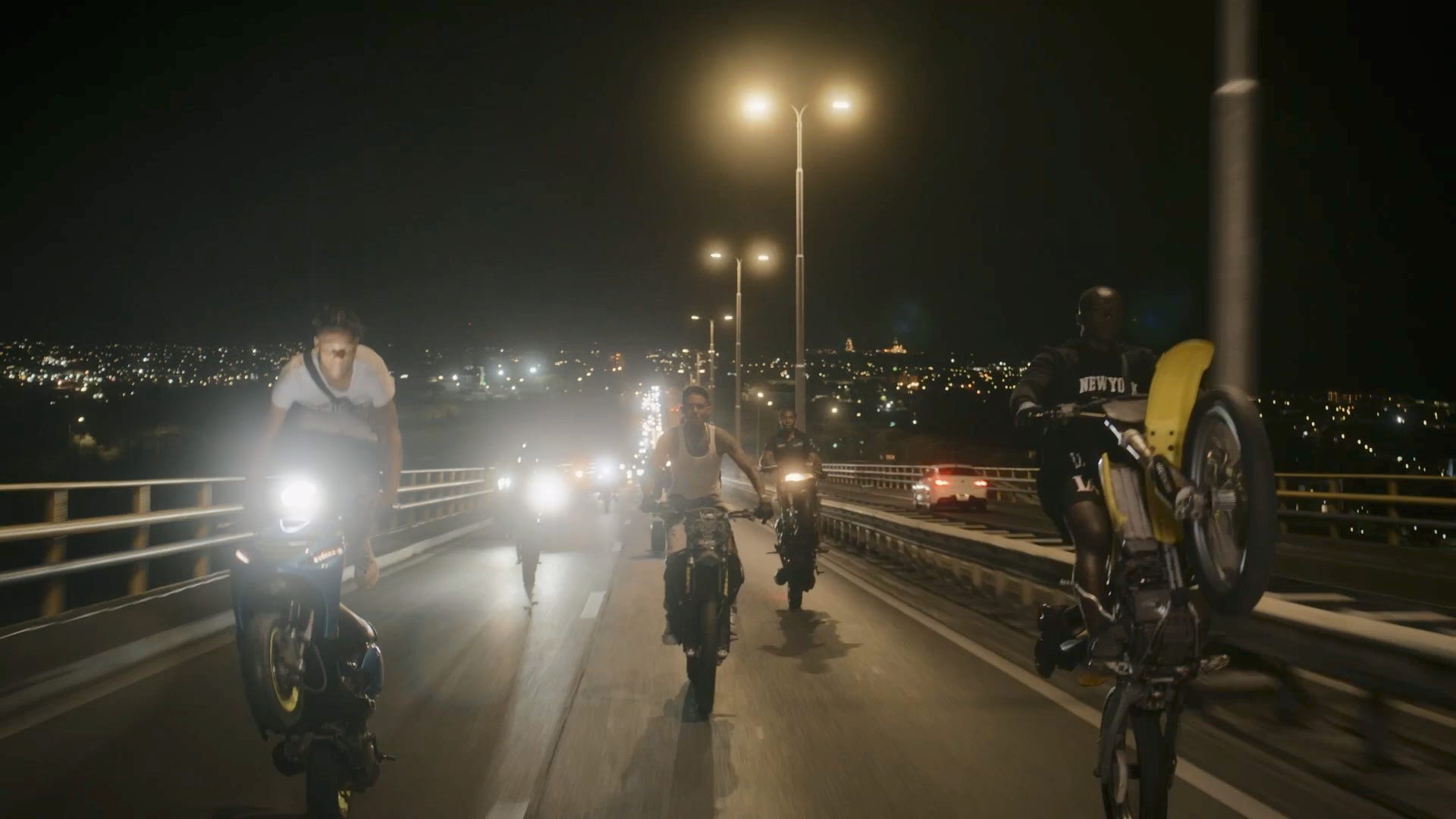
The picture becomes clear: motorsports here are not noise, not rebellion, not just a hobby. They are an economy, a craft, a coping mechanism, a form of expression, and one of the last unpolished cultural spaces where Curaçao’s identity still expressed wildly.
In that sense, motorsports is not just a cultural practice, but a portal into how identity is formed, carried, and performed on this island.
Women in the scene
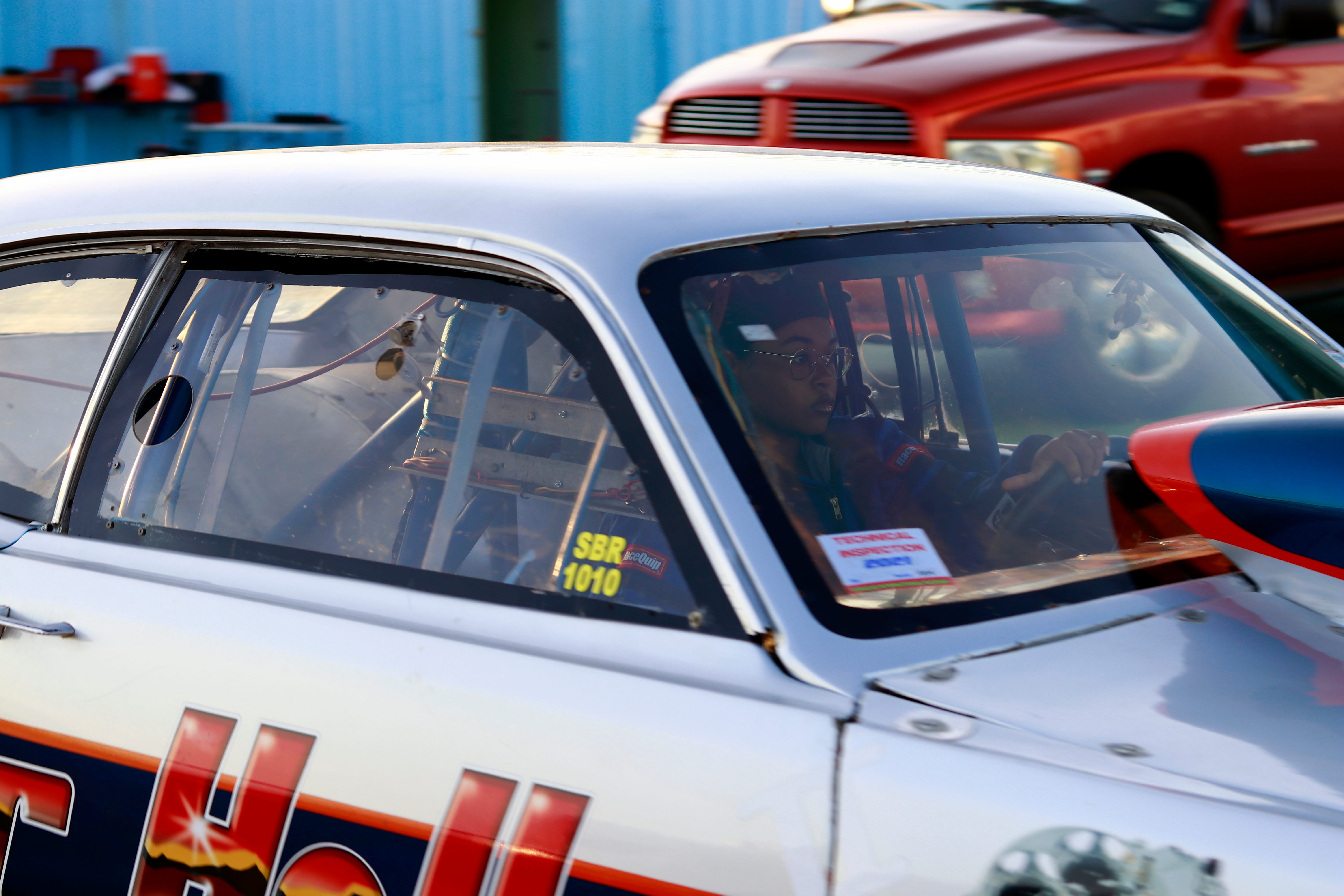
I can’t write this piece without thinking of women like Charron—racer, partner, mother—guiding her husband back on the track after a burnout, cooking while business is handles across the yard in the tuning shop, and racing herself in street-legal events.
Always feminine. Always powerful.
And while women are still a minority in the scene, their presence is undeniable.
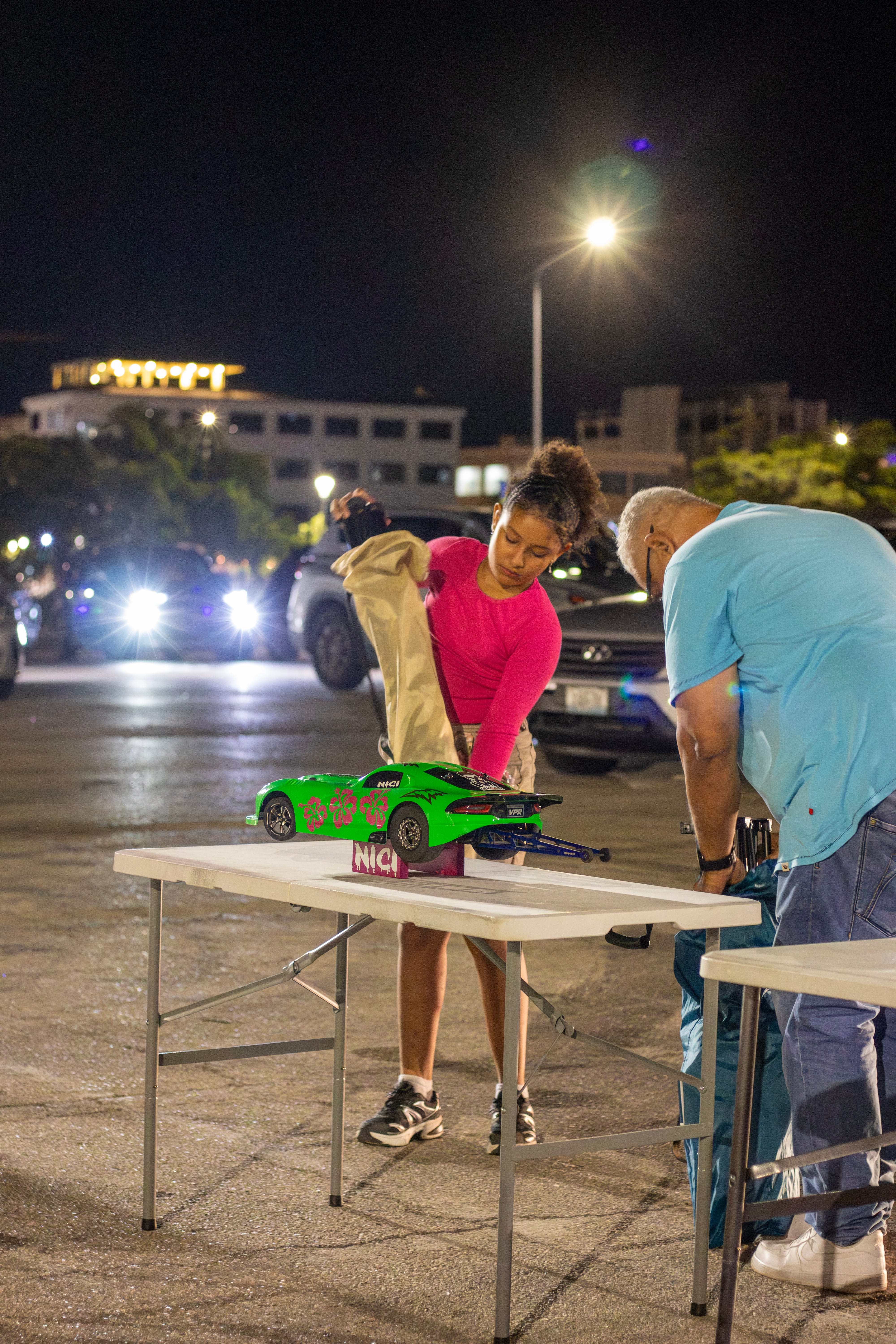
Sisters Joann and Jane would command the raceway through dragster and motorcycle, with reaction times your boyfriend would envy. Jenny Martis’ daughter, an upcoming rider and drifter, carries a presence that pulls you in immediately. And we can’t forget the rising star Nicolle, who can be spotted at Waaigat Raceway with her bright green radio-controller race-car.
Sometimes I catch myself thinking: this could have been me, in another timeline.
Present moment
Sitting here in my home, writing this piece, I hear them. Motorcycles making their way down the street. Revving.
And that’s okay.
Not because it never causes inconveniences, but because shared space means no one gets silence all the time.
This is why LIBER matters.
Freedom is not silence.
Freedom is not neat.
Freedom has a sound.
Responsibility
That doesn’t mean anything goes.
Across riders, residents, conservationists, and police, there is agreement: things must change. Public spaces must exist. Infrastructure must adapt. Safety must be taken seriously.
Freedom requires responsibility. But culture cannot survive erasure.
Community requires tolerance.
Community is inconvenience.
It asks us to make room for one another’s lives, rituals, and expressions. Even when they interrupt our comfort.
Curaçao now stands at a crossroads. Not between noise and peace, but between suppression and coexistence. The question is not whether the sound will stop. It won’t. The question is whether we are willing to build a future where everyone’s freedom has room to breathe.
This article was made possible with support from Fonds BJP